
My Friends, The Trees

I’ve often said that trees are some of my oldest friends.
That may sound whimsical, but it’s the best way I know to describe how deeply they’ve shaped my life. Some of my earliest memories are tied not to people or events, but to individual trees that stood like quiet sentinels throughout my childhood. The gnarled old apple trees on my parents’ hilltop in New England, the tall ponderosa pine by the creek on our Colorado ranch, the aspen grove where I hung my first hammock and slept under a sky so bright it felt like a living canopy. Those trees weren’t scenery. They were companions.
Even now, after many decades of wandering through forests on every continent I’ve visited, it’s those trees I met early on that remain etched most vividly in my memory. They taught me how to pay attention. How to be curious. How to feel both rooted and uplifted at once. And they shaped me long before I ever imagined I would grow up to write stories.
A Childhood Rooted in Nature
Growing up, I was lucky. Nature wasn’t something I visited on occasional holidays or school trips. It was interwoven through my daily life. On the ranch in Colorado, my siblings and I spent entire days outdoors, rolling in fresh mud, climbing the tallest trees we could reach, racing through meadows, or scrambling up the hillside behind the house. Those meadows were full of sage, juniper, and the sharp, resin-filled scent of pine. And everywhere, there were trees.
The old ponderosa pine by the creek was my favorite. Its bark smelled like vanilla if you pressed your nose close. I used to lie under it with a notebook, listening to the wind sigh through its long needles. That sound felt ancient and steadying. With my back against the trunk, I would wonder about everything this tree had seen. What storms had battered it? What wildfires had swept through before my time? What animals had sheltered in its branches or scratched their backs against its rough bark? It amazed me that a living being could stand in one place for centuries and still remain so vibrant.
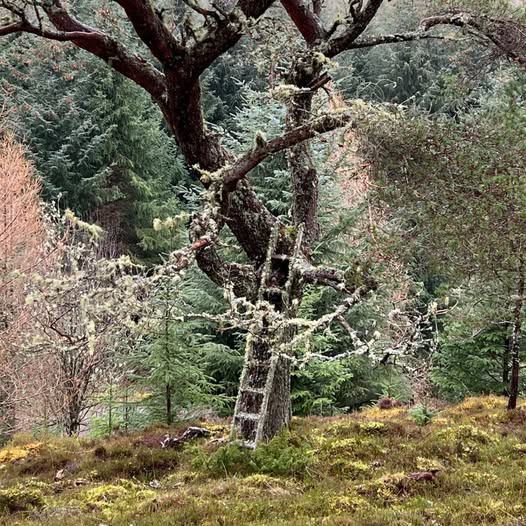
New England gave me a different kind of wonder. Those apple trees on the hilltop were old and twisted, shaped by years of storms and seasons. In the spring, they burst into blossoms so fragrant that bees hummed around them in a haze. In the fall, their apples tasted crisp and tangy. My earliest climbing adventures happened in their branches. They taught me how to balance, how to trust both my grip and my instincts, and how rewarding it can be to see the world from a higher vantage point.
Looking back, I can see that these trees were my first teachers. Before I learned lessons from books or classrooms, I learned them from roots and branches, from the ways trees endure change yet remain true to themselves.
Trees as Teachers
 As I grew older and gained more experience, I realized that trees had shaped not only my childhood but also my voice as a writer.
Readers often comment on how many trees appear in my books. They’re right, of course. There’s the ancient redwood in The Ancient One. Arbassa in MERLIN: The Lost Years. The entire world-tree in The Great Tree of Avalon. Trees aren’t just decorations in those stories. They have presence and personality. They carry memory.
Why trees? Because they embody a kind of wisdom that feels both practical and mystical. A tree stays rooted, yet reaches upward. It draws sustenance from the soil, yet stretches toward the light. It bends when the wind pushes, yet rarely breaks. If that isn’t wisdom, I don’t know what is.
A sentient tree, whether in a fantasy novel or in our imaginations, represents a way of being that humans rarely achieve. Centered. Patient. Aware. Trees witness the long story of a place. They take the slow view, the one measured in seasons rather than moments. As humans, we hurry. We chase the next project, the next task, or the next adventure. Trees remind us that insight often comes from staying still long enough to notice what’s around us.
When I write about trees, I try to honor those qualities. And when I picture fictional characters learning from a forest, I’m really remembering how I learned many of my own early lessons from the natural world.
A Redwood With a Story to Tell
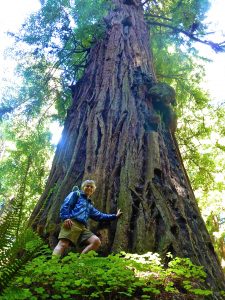 One of my favorite trees in the world grows in the Muir Woods near San Francisco. It’s a great redwood whose trunk opens like a natural cavern. The first time I stepped inside, I instinctively began to hum, then sing. The sound rose around me as if I were standing beneath a giant bell. The walls vibrated. The air trembled. I felt wrapped in something both ancient and welcoming. It felt like a hug made of centuries.
That moment wasn’t dramatic, but it was profound. I felt welcomed by a being much older and wiser than myself. Inside that tree, surrounded by its echoing voice, I realize how strange it is that humans often think of ourselves as separate from nature. Standing there, I sense how deeply connected we truly are to the places that shape us.
That experience helped inspire The Ancient One. But it also reminded me that every tree, no matter how quiet, holds a story. And that to understand even a small part of that story, we have to approach with stillness and respect.
What I Learned From Merlin
When I began writing the Merlin Saga, I knew that nature had to play a central role. Merlin learns his greatest lessons not from wizards or ancient tomes, but from the natural world. His power comes from listening, understanding, and recognizing that magic is not about dominance, but about connection.
In one scene, Merlin becomes a stag and begins to sense the world in an entirely new way. He hears the land through his bones. He feels the wind, the movements of other creatures, the subtle shifts of the meadow. Writing that passage, I was drawing from my own childhood experiences of feeling both humbled and enlarged by nature. Those moments taught me that we don’t need spells to experience magic. We only need attention.
Merlin’s journey mirrors what so many people discover in their own time outdoors: that nature offers wisdom freely, but only if we pause long enough to see it.
Why Trees Matter More Than Ever
As a child, I took for granted the ability to run through meadows or climb tall pines. Only later did I understand how rare that experience has become, that unspoiled spaces are disappearing. That many children will grow up without ever knowing what it feels like to nap in a hammock beneath aspen leaves or hear the deep creaking of a ponderosa swaying in a summer storm.
That’s why I’m grateful the Colorado ranch where I grew up is now protected by the Palmer Land Trust. Even as development spreads in every direction, the ranch remains a refuge for wildlife and for people seeking quiet. It’s a reminder that preserving land isn’t about nostalgia. It’s about ensuring that future generations can feel the same sense of connection and wonder that shaped me.
Trees stand at the center of that mission. They anchor ecosystems. They clean the air. They stabilize soil. They provide shelter for countless living beings. But they also do something quieter and equally important: they steady us. They remind us to pay attention, to breathe deeply, and to consider our place in the larger story of the Earth.
The Gift of Feeling Small and Large at the Same Time
One of the great paradoxes of nature is that it can make us feel small and large at the same time. A towering tree can dwarf us, yet it can also make us feel connected to something vast and beautiful. That sense of belonging is a gift. Trees embody it better than almost anything else. They stand rooted in one place, yet their branches reach out to the world.
Maybe that’s why I return to trees again and again, in my writing and in my own wanderings. They’ve been steady companions since childhood, and they continue to offer gentle guidance. Whenever I take the time to listen, they still have something to teach.
And as long as I keep listening, I know I’ll continue discovering new stories hidden in their branches.