Sources of Magic in Fantasy: A Guide to Wonder
Throughout my years as a writer, people have often asked me a simple question: Is magic real?
My answer depends on what we mean by magic. If we’re talking about waving a wand and turning a pumpkin into a carriage, I’ll leave that to the fairy tales. But if we’re talking about the sense of wonder we feel when we watch a meteor cross the night sky or stand beneath a tree that has lived for centuries, then I’d say magic is all around us.
I’ve spent much of my life writing fantasy, and I’m still fascinated by the possibilities it opens up. A story can take us to an island that exists only in the imagination, introduce us to creatures we’ve never seen, and raise questions about our own lives that we might never have thought to ask.
When I created the worlds of Fincayra and Avalon, I found myself thinking about the different ways magic might work. Could a song heal a wound? Could a tree connect two worlds? What might happen when someone gains an extraordinary ability but hasn’t yet learned how to use it wisely?
These questions led me in many directions. Here are a few kinds of magic that have captured my imagination, along with some of the possibilities they hold for readers and writers.
When the Earth Holds Magic
In MERLIN: The Lost Years (Book 1 of the Merlin Saga), the young Merlin arrives on the island of Fincayra with no memory of who he is. He has a great deal to learn about the island, its inhabitants, and himself. Nature plays an important part in that discovery.
The trees, rivers, and mountains of Fincayra are more than a backdrop; they help shape the story itself. They have their own histories, and understanding them requires Merlin to pay attention to the world around him.
I’ve always found that idea appealing. Spend enough time in a forest, and you begin to notice things you might have missed at first: the pattern of moss on a fallen log, the calls of birds hidden in the branches, the way sunlight changes as it passes through the leaves. The longer you look, the more there is to see.
In fantasy, that same attention can lead to magic. A character might discover that an ancient oak holds a secret, or that a river carries memories of the people who have lived along its banks. Perhaps a forest will help someone who has learned to respect its living creatures.
In the worlds of Merlin and Avalon, the natural world has a life of its own. That connection also reflects something I care about in our own world: the more we learn about nature, the more reasons we find to protect it.
For anyone writing fantasy, nature can be a rich source of ideas. Begin with a particular place. What grows there? What sounds would a traveler hear after dark? What might happen if the land itself held a secret?
You may discover that the setting has become part of the story in ways you never expected.
The Magic of Song and Words
Music can reach us in ways ordinary conversation sometimes cannot. A familiar melody can bring back a childhood memory, while a song heard at the right moment can give us courage when we need it.
In MERLIN: The Seven Songs (Book 2 of the Merlin Saga), song is a source of magic. Merlin must discover a series of mystical songs, each with its own purpose and power. Some can heal; others can change the world around him.
I enjoyed exploring the possibilities of a magic that depends on sound. What if a melody could mend a broken spirit? What if a song could reveal a truth that someone had tried to hide? And what if a song became dangerous when sung by the wrong person?
Sound also gives a writer a way to bring a scene to life. A whispered spell in a dark cave feels different from a song carried across a mountain valley. The voices of several people singing together can create a different kind of magic from a lone singer’s voice.
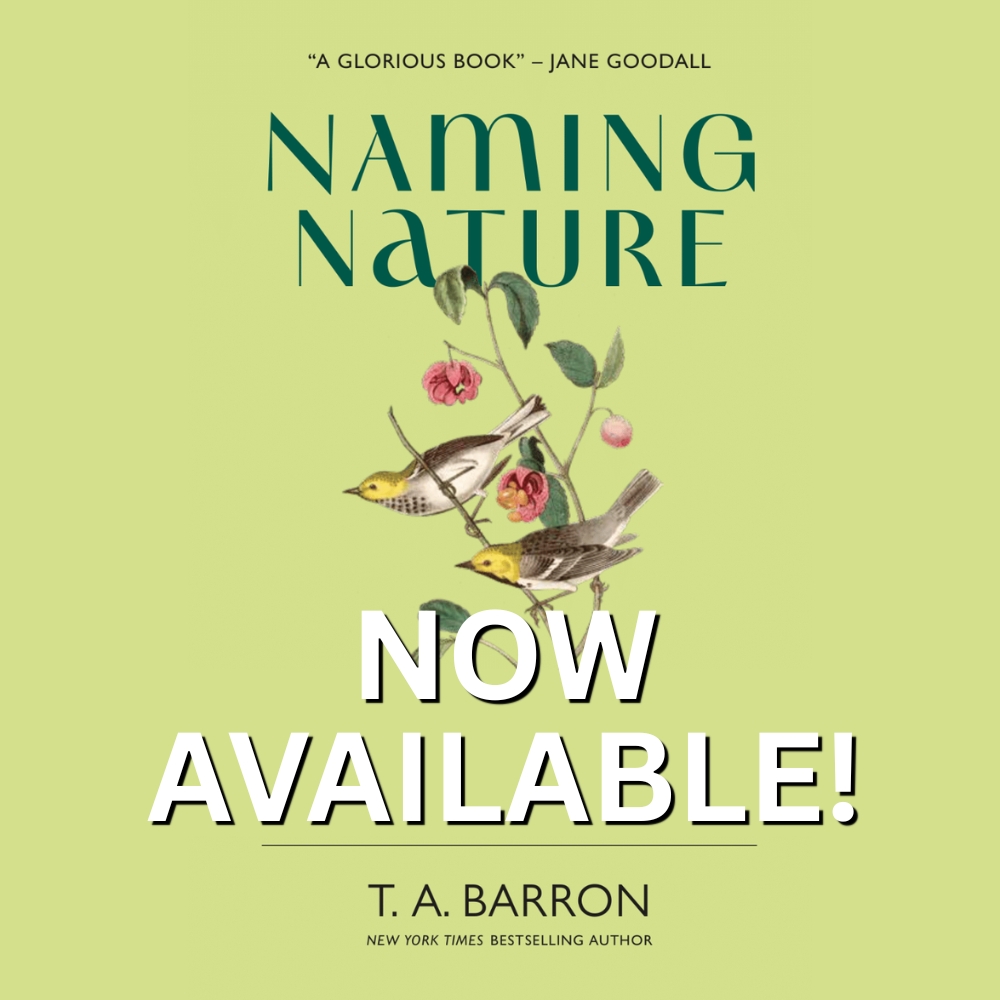
Words have their own mysteries, too. As I researched for Naming Nature, I explored another side of this idea: how the names we give the natural world shape what we notice and how we value it. Knowing the name of a creature can help us see it more clearly, understand its place in the world, and recognize our responsibility to protect it.
In fantasy, that connection between names and understanding can take on a literal kind of magic. A forgotten word might hold the key to an ancient spell. Learning the true name of a creature might reveal a bond that a character never knew existed.
Sometimes, the right word doesn’t simply describe the world. It changes what a character understands about it — and what they can do.
The Magic of Elements: Earth, Air, Fire, and Water
Earth, air, fire, and water have inspired magical traditions for centuries. Each has qualities that make it an intriguing source of power in a fantasy story.
Earth can provide shelter and strength. Air carries seeds, clouds, and birds across great distances. Water sustains life, shapes coastlines, and can turn a peaceful river into a raging flood. Fire warms a home on a cold night, yet a single spark can start a forest fire.
These forces help shape the different root-realms of Avalon, including Airroot, Waterroot, and Fireroot. In MERLIN: The Raging Fires (Book 3 of the Merlin Saga), fire takes on a particularly important role.
Fire interests me because it can be both a gift and a danger. The same flame that cooks a meal can destroy a home. Its usefulness depends on how it is handled, and its dangers demand respect.
That tension can make elemental magic especially interesting. A character who learns to summon fire might also have to learn restraint. Someone who can control water might face a difficult choice when a whole community depends on the same source.
The ability itself may be extraordinary, but the choices that follow can reveal much more about the person who possesses it.
For writers, the elements provide a starting point. The real possibilities emerge when you decide how magic works in your particular world and what its use demands of the people who wield it.
The Magic of Transformation
What would it be like to fly above the treetops or see a familiar place through the eyes of another creature?
Shape-shifting and illusion give fantasy characters ways to experience the world from unfamiliar perspectives. Across the Merlin books, readers encounter unusual beings, including deer-people and winged humanoids, whose appearances and abilities expand the possibilities of the worlds they inhabit.
But a change in form can bring unexpected complications. A character who takes another shape might discover that their new body comes with limitations they never anticipated. Someone who disguises their identity might gain access to a place they could never enter otherwise, only to find that maintaining the disguise becomes harder than expected.
Such changes raise questions about identity. How much does appearance shape the way others treat us? What might we learn by seeing a familiar place from a different point of view?
A transformation can also reveal something about the character experiencing it. Someone who longs to become a bird might discover that freedom comes with risks. A character who can make themselves invisible must decide whether to use that power to help someone or escape responsibility. In these moments, magic becomes a way to explore a character’s fears, values, and choices.
For me, transformation is most interesting when it changes more than a character’s appearance. It should open up new possibilities, introduce a meaningful challenge, or force a character to see the world differently. When that happens, the magic becomes part of what drives the story forward.
The Magic of Objects
A magical object can begin with a simple question: Where did it come from?
Perhaps it is an ancient mirror, a mysterious staff, or a tree whose roots connect distant worlds. The object might have been created for a particular purpose, passed from one generation to another, or lost during a forgotten war.
Its history can shape the story long before a character discovers it.
Imagine a sword forged to defend a kingdom. What happens when someone uses it to conquer a neighboring land? Or consider an object that grants its owner extraordinary abilities. Does possessing it make someone worthy of that power?
Questions like these give magical objects a place in the larger story. Their origins can reveal something about the world’s history, while the choices characters make about them can affect the future.
I also like the possibility that an object may be misunderstood. A character might spend years searching for a legendary treasure, only to discover that its real purpose is quite different from what the stories claimed.
For writers, a few questions can help bring a magical object to life. Who made it? What was it meant to do? And what might happen if it falls into the wrong hands?
The answers can lead a story in surprising directions.
The Magic of Imagination
There are so many ways to imagine magic. It might live in the natural world, take shape through music, or belong to an object with a long and mysterious past.
For me, one of the greatest pleasures of writing fantasy is discovering what happens when an idea takes hold. A character begins to make choices. A place develops a history. A small question grows into a story that I hadn’t planned when I first sat down to write.
Readers take part in that process, too. When you open a book, you bring your own memories and experiences to the world inside it. Two readers can encounter the same character and come away with different ideas about what that character’s choices mean.
That is part of the fun of imagination. It gives us room to ask questions, entertain possibilities, and look at familiar things from a different angle.
And the world outside our books offers plenty of reasons to keep wondering. Scientists are still learning about the lives of trees, the behavior of distant stars, and the extraordinary creatures that share our planet. The more we discover, the more questions we have.
I find that encouraging. There is always something left to learn, whether I’m working on a story or walking through the Colorado mountains near my home.
As autumn settles in and the evenings grow longer, I hope you’ll find some magic in the pages of a good fantasy novel, an old favorite, or a story you’ve been meaning to write. And perhaps you’ll discover a little magic in the world around you, too.